What Is the Best Planning System for Working Moms?
The best planning system for working moms isn’t about finding the perfect planner—it’s about planning according to your actual roles, not expert advice designed for single-focus lifestyles. After spending over $1,000 on planners and following every expert system, I discovered the role-based planning method that ended my overwhelm in just 45 minutes.
Here’s the truth most planning experts won’t tell you: You’re not failing at planning. The planning systems are failing you.
Why I Spent $1,000 on Planners and Still Failed at Everything
This is embarrassing to admit, but I spent over $1,000 following planning experts and buying every “best planner of the year.” Beautiful Hobonichi planners. Trendy bullet journals. Digital systems. Expert frameworks. You name it, I bought it.
And I was still failing at everything that mattered most—missing my daughter’s precious moments while drowning in systems that simply did not work for my life.
Every time I opened that gorgeous Hobonichi with its pristine empty pages, I felt crushing guilt. I bought it with such high hopes. I was going to journal every single day, create beautiful memories, be this organized, mindful person.
Instead, I got daily reminders of my failure.
But here’s what really frustrated me: Every time a system didn’t work, I blamed myself.
“I’m just not disciplined enough.”
“I’m not organized enough.”
“Maybe I’m just not a planning person.”
Sound familiar? Drop a comment below if you’ve ever felt this way about your planning struggles.
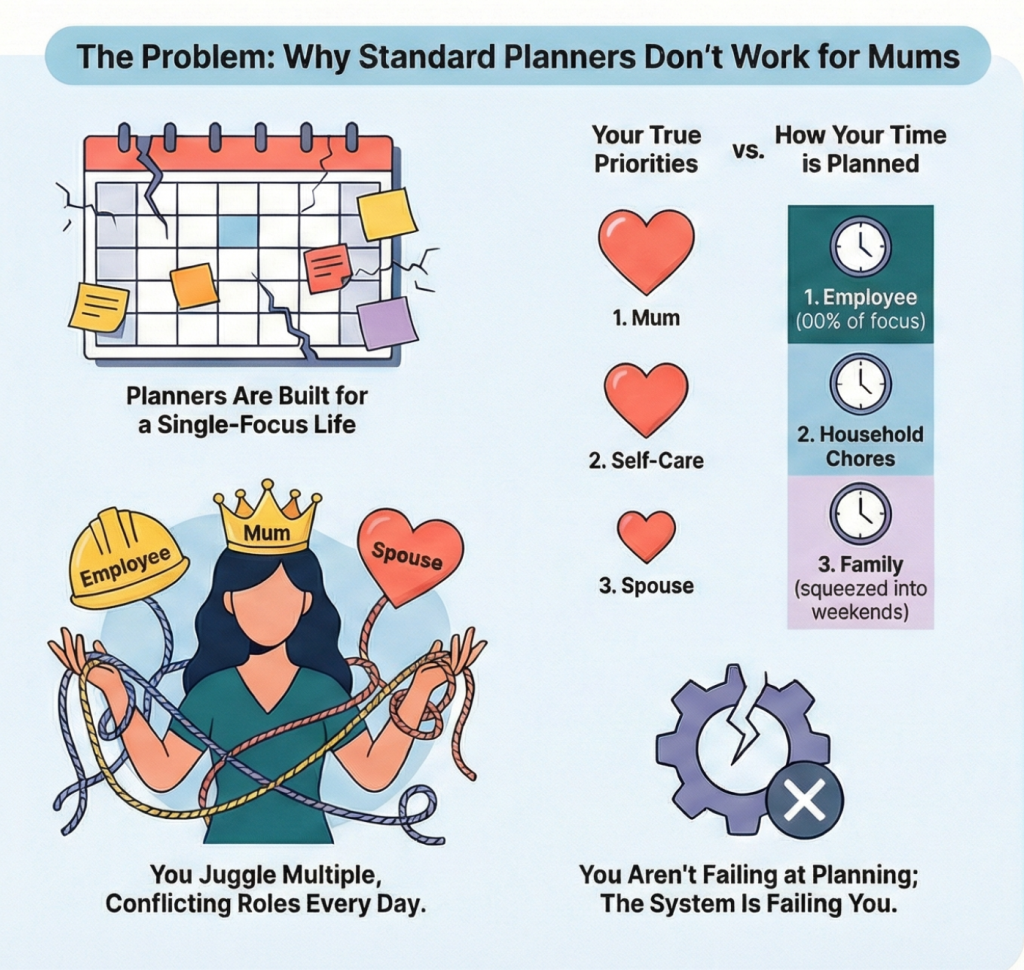
The Real Problem Runs Deeper Than Wrong Planners
After 25 years of planning and testing every system imaginable, that $1,000 investment taught me an expensive but life-changing lesson: The problem wasn’t me. The problem was that planning experts create systems for a general ideal life—not YOUR life.
Think about it. Most planning systems are designed for people with:
- Predictable schedules
- Uninterrupted time blocks
- Single, clear roles
College student planners assume you have blocks of uninterrupted study time. The Hobonichi assumes you have quiet moments every day to journal and reflect.
But working moms? We’re living a completely different reality.
The Planning Expert Secret They Don’t Tell You: You’re Not One Person
The breakthrough came when I was juggling my 9-to-5 job, raising my daughter, and trying to keep everyone happy. I was drowning, and no planning system was helping.
That’s when I realized something planning experts failed to address: I wasn’t just one person trying to get organized. I was actually seven different people.
When I looked at my daily life, I was simultaneously:
- A mom
- A spouse
- An employee
- A daughter-in-law
- A homeowner
- A business owner
- An individual with my own needs
And these roles were constantly fighting each other for my time and energy.
The Hidden Role Conflicts Creating Your Overwhelm
Here’s what this multi-role reality actually looks like:
Mom versus Employee: My daughter interrupting my work calls, needing me when I had a critical presentation due.
Spouse versus Household Manager: My husband depending on me for household management, meal planning, and keeping track of everything.
Mom versus Individual: Being the default parent for absolutely everything, while my own needs—exercise, hobbies, rest—got pushed to the bottom of the list.
Employee versus Family Member: Working overtime because others couldn’t manage their time well, which meant missing dinner with my family—the one thing I valued most.
No wonder I felt like I was failing at everything.
I was trying to use planning systems designed for people with one clear role, but I was living a multi-role reality.
The Book That Changed Everything: My Role-Based Planning Discovery
After reading “Do What Matters Most” by Rob and Steve Shallenberger, I did a simple exercise that made everything click into place.
This is the exact 45-minute process that changed everything for me—and you can do it today.
Step 1: Take a Planning Audit (Understand Your Planning Personality First)
Before you jump into the role exercise, you need to understand your planning personality. I’ve created a free planning assessment that reveals your planning personality in under 10 minutes.
Why is this step crucial?
Just like some people are visual learners and others are auditory learners, we all have different planning personalities.
Some people thrive with detailed daily schedules. Others need flexible weekly overviews. Some need digital systems. Others need pen and paper.
The audit reveals how your brain naturally wants to organize information.
Here’s the key: Your planning personality affects how you’ll approach your roles.
A detail-oriented person will manage their mom role differently than someone who prefers big-picture thinking.
For example:
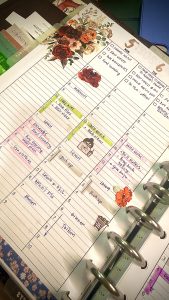
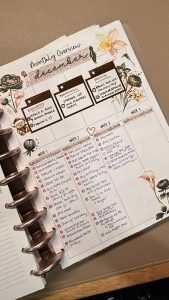
- If you’re a visual planner, you might need to see your roles color-coded on a calendar
- If you’re a list maker, you might prefer role-based task lists organized by category
The audit helps you understand your natural tendencies before you redesign your system.
Step 2: List Your Biggest Planning Frustrations
Is it work interruptions? Family not cooperating? Being the only one who remembers everything?
Write it all down.
For me, my frustrations included:
- “I plan my week perfectly, and then my daughter gets sick and everything falls apart”
- “I block time for important work, but everyone treats my time like it’s available for any emergency”
- “I’m constantly interrupted in my office, making focused work impossible”
Now, you might be thinking, “This is just complaining.” But here’s why this step is so powerful:
When you write down your frustrations, you can actually start solving them instead of just feeling overwhelmed by them.
For example, when I identified constant work interruptions, I started doing my top-priority work at 8:00 a.m. before everyone else reached the office. About 10:00 a.m. onwards, things got busy and chaotic. That one change gave me back 2 hours of focused work time every day.
Another frustration was family not cooperating. Instead of just being annoyed, we sat down and talked about it. That’s how I discovered my husband didn’t mind doing laundry, but he hated folding clothes. So I took charge of folding, and he handles all the washing. And let me tell you, his laundry skills are way better than mine!
What I’m telling you is this: These frustrations can actually be addressed when you list them down and start figuring out solutions.
Instead of just feeling frustrated, you can reduce or eliminate these pain points entirely.
When you do this step, don’t just write “My family doesn’t help.” Be specific:
- “My husband leaves dishes in the sink”
- “My kids never put their school bags in the right place”
- “I’m the only one who knows when bills are due”
The more specific you are, the easier it becomes to find practical solutions.
This step transforms you from someone who’s constantly reacting to problems into someone who’s proactively solving them. And that makes everything else in your planning system work better.
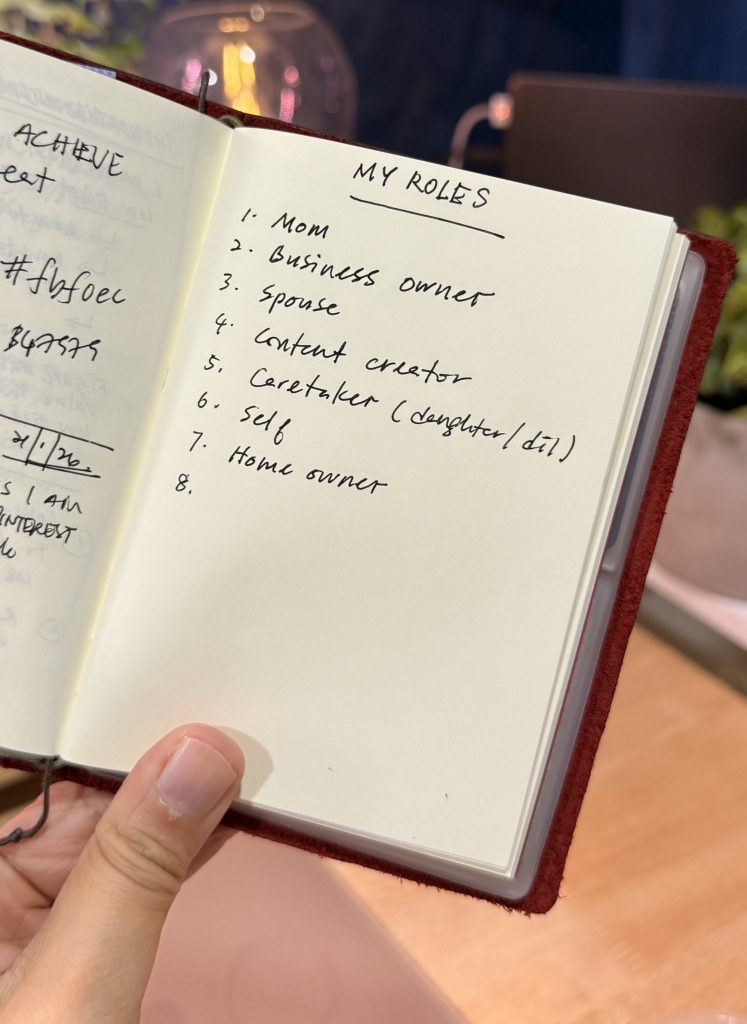
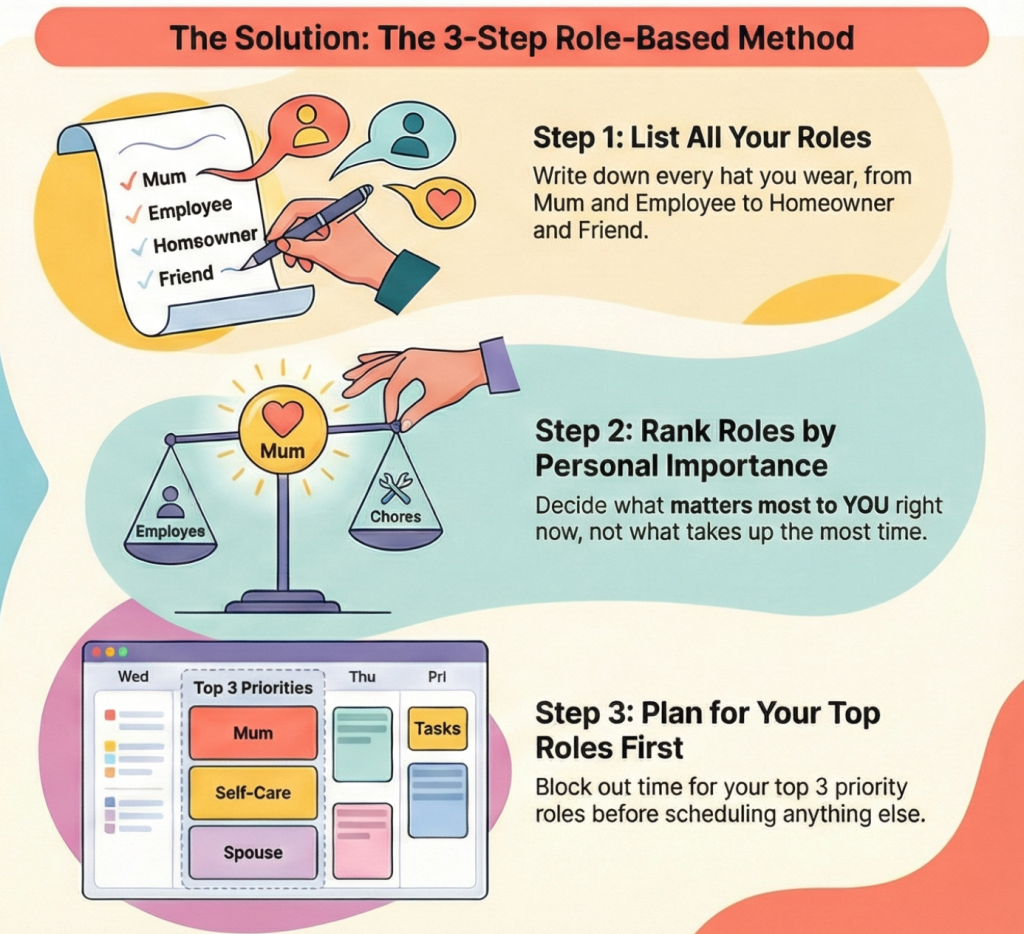
Step 3: Write Down All Your Roles (Don’t Leave Anything Out)
Mom. Spouse. Pet owner. Employee. Daughter. Friend. Homeowner. Volunteer. Whatever applies to your life.
This step is the most crucial because by identifying each role, you know exactly what tasks come with it.
When I wrote down “homeowner,” I realized that means:
- Property tax payments at certain times
- Air conditioning maintenance
- Lawn care schedules
- Home repairs and upkeep
As a “mom,” it’s not just “spend time with my daughter.” It includes:
- Meal prep for school
- Being in charge of school play tasks
- Helping with lessons
- Driving to extra classes
- Doctor’s appointments
- Play dates and social development
As a “caretaker to aging parents,” you need to:
- Schedule and bring them to hospital for regular checkups
- Manage their medications
- Coordinate with doctors
- Handle their finances and paperwork
Each role comes with its own set of responsibilities and deadlines that you’re trying to keep track of in your head.
When you see each role clearly defined with specific tasks, you stop feeling like you’re drowning in random to-dos. Instead, you understand exactly why your brain feels scattered.
Step 4: Rank These Roles by Importance to YOU
Not what society expects. Not what your family expects. What matters most to you right now in this season of life.
This part was revolutionary for me because I realized I had been planning according to everyone else’s priorities.
Let me explain exactly what I mean.
My Reality Check: Where My Time Actually Went
My typical weekly planning when I worked my 9-to-5 job:
Monday through Friday, 7:00 a.m. to 7:00 p.m., completely blocked for work.
My daughter’s activities? Squeezed into weekends together with house chores, other events, and visiting my own parents. I was pushing those visits so many times that I realized I hadn’t visited them for one whole year.
Time for myself? What even is that?
What happened in practice:
- When top management scheduled a last-minute meeting, I moved everything else around it
- When my daughter’s teacher wanted to meet, I stressed about taking time off work
- When I needed a mental health day, I felt guilty because work comes first
The Life-Changing Realization
But here’s the crazy part: When I actually ranked my roles by what mattered most to me, the results shocked me.
My True Priorities:
- Mom (#1)
- Self-care (#2)
- Spouse (#3)
- Employee (#4)
Yet my planning looked like employee was the ONLY role that mattered. My role as employee was getting 60% of my planning attention, but mom and self-care were my actual top priorities.
Here’s the life-changing realization: I thought I wanted to climb the corporate ladder and become the secretary general in the government ministry.
But after doing this exercise, I discovered that my ultimate happiness came from being with my family. That brought me the most joy, the most fulfillment.
All those late nights planning my career advancement, all that energy I spent impressing superiors—I was chasing someone else’s definition of success while my real happiness was sitting right at the dinner table every night.
Your Priorities Can Shift by Season
Now as a business owner, my current priorities are:
- Mom (first)
- Business (second)
- Spouse (third)
But here’s what’s beautiful about this system: These priorities can shift based on what’s happening in your life.
For example, when my father was sick, my role as “daughter” became my number one priority. I needed to visit him, care for him, and everything else—my mom duties, my business responsibilities, spouse role—got rearranged around that. And that was exactly right for that season.
Your role priorities are not set in stone. They’re meant to reflect what matters most to you right now in this season of your life.
The Critical Mistake Most Working Moms Make
Here’s the mistake that most working moms make: They rank their roles based on what takes up the most time, not what brings them the most fulfillment.
Time spent doesn’t equal importance.
Once I understood this, everything changed. I started planning according to my current priorities, not society’s expectations or what worked for me 5 years ago.
And here’s what shocked me: When you align your planning with your actual current priorities, everything flows better. You’re not constantly fighting against your own values.
Step 5: Plan for Your Priority Roles First (Where the Magic Happens)
This is where the magic happens.
Instead of trying to be perfect at everything, I started planning for my priority roles first.
Here’s exactly how I do it now:
I take my weekly planner and ask:
- “What does my role as a mom need this week?”
- “What does my role in business need this week?”
- “What does my role as spouse need this week?”
Only after I’ve honored my top three roles do I fit in everything else.
The key is this: Your planning should serve your current priorities, not the other way around.
When you design your week around your most important roles first, everything else falls into place more naturally.
What You Just Learned About Planning Systems for Working Moms
You’ve just discovered:
- Why planning expert advice fails working moms
- The role conflicts that create your daily overwhelm
- The exact five-step process to create planning that actually fits your life
Here’s what I want you to remember: You are not a planning failure.
You’ve been trying to fit your complex multi-role life into someone else’s simple system.
Your roles matter. Your priorities matter. And your planning should reflect this.
About Vin: I’m a YouTube content creator and entrepreneur specializing in planning systems for working mothers. With 25 years of planning experience and an MBA in Finance, I help moms transition from full-time jobs to entrepreneurship through my proprietary V.I.N. Method™. After spending 18 years in government service, I pivoted to full-time content creation in 2023. My mission is to help working moms stop drowning in systems that don’t work and start planning according to what actually matters to them.
Frequently Asked Questions
How do I know if a planning system is right for me?
The right planning system aligns with your planning personality and current life roles. Take a planning personality assessment first to understand if you’re a visual planner, list-maker, or big-picture thinker. Then choose a system that accommodates your top 3-5 roles rather than forcing you into a one-size-fits-all approach.
What if my priorities change from week to week?
That’s completely normal for working moms! The role-based planning method is designed to be flexible. Your priorities can shift by season of life or even week by week. The key is to reassess your top priority roles during your weekly planning session and adjust accordingly.
How much time should I spend on weekly planning?
Start with 45 minutes once per week for your initial role assessment and weekly planning. Once you’ve established your system, you can maintain it with 15-20 minutes of weekly planning and 5 minutes of daily review. The time investment pays off exponentially in reduced overwhelm and increased focus.
Can this work for stay-at-home moms too?
Absolutely! The role-based planning method works for any mom managing multiple roles—whether you work outside the home, run a business, or manage your household full-time. Stay-at-home moms often have even more role conflicts (homemaker, chef, teacher, activity coordinator, household manager) that this system helps organize.
What’s the difference between role-based planning and regular planning?
Regular planning focuses on tasks and time blocks without considering the bigger picture of why certain things matter. Role-based planning starts by identifying your roles, ranking them by current importance, and then planning tasks according to those priorities. This prevents you from spending 60% of your time on your 4th-priority role while neglecting your top priorities.